Inside TK999, the Scrabble slot stands out because it plays like a word machine, not a traditional reel sprint. You draw a rack of letters, the game builds the best scoring word it can find, and you decide what to keep before the second draw. This is a full, mechanics-only breakdown of Scrabble on TK999 for Bangladesh players - symbols, scoring flow, bonus features, and what the screen is really telling you in demo or free play, with zero side talk.
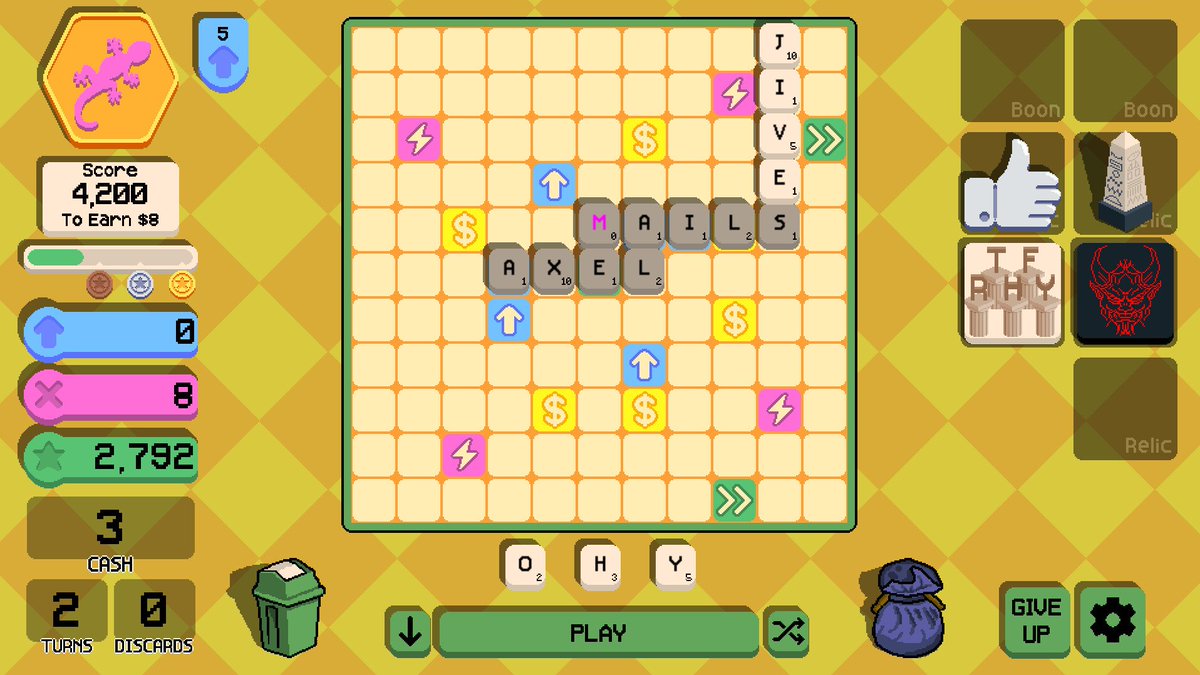
Scrabble is all about word scoring and quick choices, so learn the round structure first. You are not chasing lines - you track letter value, word length, and whether to lock the score now or push for a stronger second draw. The UI shows the best word and its points directly on the playfield.
The game stays easy to read because results come from visible parts: your letters, the word the game builds, and the score it assigns. Once that clicks, every feature feels like a natural extension of the same loop.
| Parameter | Scrabble Slot Value |
|---|---|
| Game style | Word based video slot with 1 rack of 7 letter tiles |
| Core loop | 2 draw round: draw 1 - optional hold - draw 2 |
| Scoring | Tile values 0-10 points (tiered values), English set totals 100 tiles |
| Visual guidance | Best word is highlighted after each draw - 2 best word reads per round |
| Bonus feature | 1 Bonus Meter that can unlock 1 Bonus Round |
| RTP | 90-98% |
Scrabble on TK999 stays satisfying because every round shows its logic in plain sight - letters in, best word out, and a bonus meter that keeps the momentum moving.
Scrabble on TK999 runs on a two-step round. First you get a rack and the game shows the best scoring word. Then you can improve it by keeping part of the rack and redrawing the rest. The choice is simple: lock the current score or chase a better second draw.
That is why it plays differently from most Bangladesh lobby slots. You are not hunting reel matches - you are judging letter potential. High-value letters help, but a rack with good structure (vowels plus common consonants) often beats a flashy rack that cannot form longer words.
Read each Scrabble round as a quick two-step puzzle: the first draw sets the baseline, the keep decision sets up the upgrade, and the second draw locks the final result. After a few rounds, the system becomes predictable.
The UI does the heavy lifting. It highlights the best word it can build from your tiles and shows the score, so you only decide one thing: keep the current result or redraw for a better finish. The complete gameplay flow works like this:
After a few sessions, one rule becomes obvious: keep the word core, not just the high-value letters. A single expensive tile matters only when it fits into a valid word the game can score.
You will also feel the tempo. Some first draws are already strong, so you lock them in. Others are close but messy, and that is where a smart keep turns an average rack into a clean finish.
In Scrabble, every symbol is a letter tile, but they do different jobs. Some letters build structure and open up long, valid words, while others mainly raise the point total when they land inside a word that already works. The best-word highlight is your quickest read of the round because it shows how the rack actually connected, not how it looked at first glance.
Before you start thinking about “good” or “bad” racks, focus on what the game can legally assemble from the final tiles. Scrabble does not reward visual similarity - it rewards word paths. Two racks can share most letters and still score far apart if only one of them forms a clean, recognized word with strong length and value. Keep these core scoring principles in mind:
Once you read it this way, Scrabble becomes pattern recognition. You start spotting “alive” racks that can connect before the highlight even updates, and “stuck” racks that look close but have no real word spine. The slot stays engaging in demo or free play because it shows its logic on-screen every round: letters in, best word out, score attached.
The bonus layer in Scrabble is built to boost the same word-first loop, not distract from it. The Bonus Meter is the key piece because it connects rounds into one clear progression - you still focus on letters and word score, but now you also track how close you are to a Bonus Round. It gives the TK999 game pace without breaking the theme, because everything still points back to scoring and building better words.
| Bonus element | What it does | What you see on screen | What to track |
|---|---|---|---|
| Bonus Meter | Builds progress across rounds | A meter that visibly moves | How close it is to trigger |
| Progress events | Push the meter forward | Small progress updates during play | Which rounds move it faster |
| Trigger point | Unlocks the feature | A clear “ready” moment | Timing of the activation |
| Bonus Round | Bonus sequence tied to letters and scoring | Feature screen with scoring focus | How it changes the pace vs base loop |
| Core loop overlap | Keeps the same logic as base play | Word score remains the main signal | Best word score plus meter progress |
In practice, you are always reading two signals at once: the best word score in the current round and the meter’s long-term progress. When the score is strong and the meter is climbing, Scrabble feels quick and purposeful even though the main mechanic is still a simple two-draw decision.
Scrabble demo mode is the quickest way to learn the game’s logic. You see the best word and its score every round, so it is easy to spot patterns: which racks create long words, which letters need support, and when the Bonus Meter actually moves.
Demo also sharpens the keep or redraw decision. After a few rounds you can predict the best word before the highlight updates, and the game becomes a clear word engine instead of a reel chase. Focus on observing these patterns while you play:
Once you treat a demo as a short training loop, Scrabble becomes simple to navigate in any session: you judge the rack, protect the letters that create real words, and keep one eye on the Bonus Meter so every strong round feels like it is pushing toward something.
Each round has two draws. You see a rack, the game highlights the best scoring word, then you can keep part of the rack and redraw the rest to improve the final word and score.
No. Scrabble is built around word scoring and a Bonus Meter that can unlock a Bonus Round, not a classic Free Spins feature.
RTP depends on the specific version running in the lobby, but Scrabble slots commonly sit in a typical online range around 90-98%. Always treat the number you see in-game as the only exact one.
Use one simple rule: lock when you already have a real word core, redraw when you only have “value” without structure. Here is how to apply this rule in practice:
That quick checklist keeps your choices consistent, so every round becomes a clear read: protect the word core, upgrade the edges, and let the score plus Bonus Meter confirm the right call.
Because scoring is driven by valid words, not visual similarity. Two racks can share most letters, but only one may contain a clean word path that the game can assemble into a longer, higher scoring result.
Some letters act like glue that makes length possible, others are just point boosters. If the “glue” is missing, the best word stays short even when the rack looks strong.